The first decision an independent filmmaker must make before touching a 360-degree camera is deceptively simple: does the audience watch, or do they act? That single choice, as Film Independent's filmmaking guide puts it, determines whether you shoot monoscopic 360 video or build your project in a game engine such as Unity or Unreal. Everything downstream — camera type, rig, data management, and post-production workflow — follows from it. This article walks through the main stages of a VR/AR narrative production, from concept and virtual scouting through shooting, stitching, and distribution, and gives you a framework for choosing the right path for your story.
VR/AR Filmmaking Decision Framework
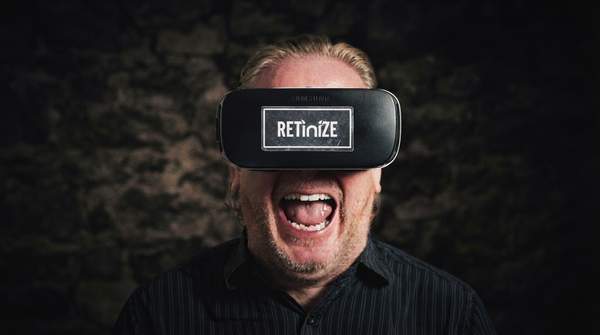
The clearest way to classify immersive projects is by the audience's role. If viewers are passive observers, you are making 360-degree video, captured with a camera rig and delivered as stitched footage. If they have agency and the ability to interact with in-story elements, you need a real-time engine. Film Independent's guide is explicit on this point: an interactive project "you'll need to build out using a game engine, such a Unity or Unreal," and either approach can work — but you need a clear vision of what you want ahead of time and must work toward it from the beginning.
| Creative goal (audience role) | Technical path | Key tools | Primary production challenge |
|---|---|---|---|
| Passive observer watching a fixed story | Monoscopic 360-degree video capture | Multi-lens 360 camera rig | Camera and rig selection; stitching and data management |
| Active participant with in-story agency | Real-time interactive build | Game engine such as Unity or Unreal | Interactive design and engine development from day one |
Within the passive path there is a further technical fork. Film Independent's guide distinguishes stereoscopic from monoscopic cameras, noting that monoscopic cameras such as Samsung's Gear 360 use two 180-degree lenses to capture a full 360-degree image. Stereoscopic capture adds depth, moving closer to what viewers perceive as true VR. The framework's practical value is that it forces the interactivity question at the concept stage, before equipment is rented or a pipeline is built.
Pre-Production: Concept, Planning, and Virtual Scouting
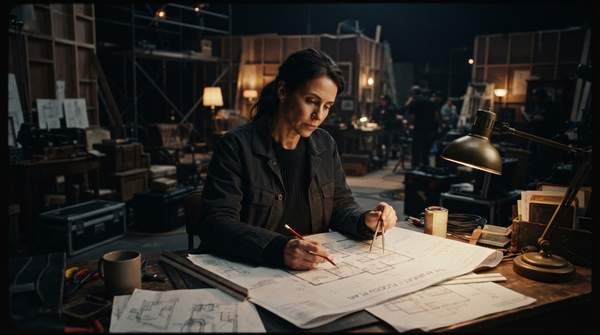
Pre-production for an immersive project combines conventional story development with technical preparation. Practitioners writing on VR production emphasize that once the story exists, "flexibility is in order as is research," and that choosing the right camera and rig is as much of an art as the filming itself. Camera tests against the specific goals of the project — not generic spec comparisons — are the recommended way to decide.
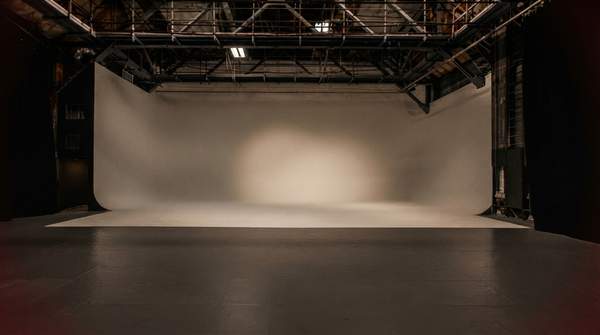
Virtual scouting extends that planning into the digital realm. CG Spectrum's explanation of the virtual production process describes it as creating a digital version of proposed sets and locations using movable digital props and virtual cameras with lenses, which crew members can explore on a computer or through a head-mounted display. Previsualization works similarly: a virtual sandbox for exploring lighting, camera angles and movement, stage direction, and editing before production begins. For an independent filmmaker, these tools can surface problems — a blocked sightline, an unusable camera move — while they are still cheap to fix.
Production: Camera Choices and On-Set Considerations
On set, the interactivity decision made in pre-production becomes physical. A passive 360 shoot means a rig with multiple synchronized cameras, and that imposes a discipline unfamiliar to most film crews: meticulous data management. The VR production practitioners behind the "Going in Circles" account describe preparing a 16-camera GoPro Odyssey rig by numbering every camera and every SD card before rolling. Their guidance is that preparation makes all the difference and saves substantial time in post.
They also stress that the delivery format question changes the workflow itself. In conventional film production, you know your delivery format and leave transcoding to distribution; in VR, the immersion level you have chosen changes your tasks and aspects of your workflow depending on the cameras used. The practical implication for a small crew is that on-set organization — labeling, backing up, and verifying media from every lens — is not an administrative afterthought but a core production task whose failure is expensive to unwind later.
Post-Production: Stitching, Editing, and Immersive Integration
Post-production for 360 video begins where conventional post does not: stitching the images from multiple lenses into a single coherent sphere, then reformatting the media for an editing timeline. The "Going in Circles" account frames the shoot-to-distribution continuum as something to plan for from the start, since the chosen cameras and immersion level shape what post must accomplish.
For projects that lean on virtual production techniques, post-production can shift earlier and become lighter. CG Spectrum notes that virtual sets allow concepts and assets to be mocked up quickly and edited in real time rather than waiting for post-production, helping maintain continuity and enabling hassle-free pick-ups and reshoots. Lighting managed through LED volume screens rather than extensive on-set rigs also reduces work required both on set and in post. For an independent creator, the trade-off is front-loaded complexity — building digital environments before shooting — in exchange for faster, cheaper revisions afterward.
Distribution and Audience Experience
Distribution for immersive work is not only a question of platforms but of what the audience will do there. Arctic 7's breakdown of the virtual production workflow argues that the technique functions less as a filmmaking method and more as a world-building engine: a digital set that would traditionally be torn down after filming can instead be repurposed as a playable level in a video game or an explorable location in a VR app. That reuse saves time and budget on asset creation and keeps a consistent visual identity across projects.
The same source points to adapting environments for platform-specific content — an interactive tour of a hero's headquarters, or a side story exclusive to a mobile experience — as a way to create more engagement and revenue opportunities when multi-platform storytelling is planned from the start. CG Spectrum reinforces the underlying technical enabler: 3D model assets are cross-compatible and can be digitally repurposed, ensuring continuity while saving productions time and money. For an independent filmmaker, the takeaway is that distribution planning belongs in pre-production, because the assets you build can outlive the single film.
Making Your Immersive Story a Reality
Independent filmmakers should first define their desired level of audience interactivity — passive 360-degree video versus interactive, game-engine-based VR — because that fundamental choice dictates camera technology, production workflow, and post-production requirements. The decision framework above is the tool for doing so: locate your story on the audience-agency axis, and the technical path follows.
The measurable next step is concrete: a clear project plan outlining the chosen interactivity level, the camera type (monoscopic or stereoscopic, and the specific rig), and a high-level workflow spanning pre-production, production, and post-production. A plan that names those three elements — interactivity, camera, and stage-by-stage workflow — is the evidence that the decisive choices have actually been made before money is spent.