Virtual production is fundamentally reshaping the film industry by dismantling the traditional, linear sequence of filmmaking in favor of a more collaborative and iterative process. Technologies like real-time rendering engines and massive LED volumes are not just changing the scenery; they are redefining the responsibilities, skills, and daily workflows of established crew members. This shift moves critical creative decisions from post-production directly onto the live-action set, demanding new expertise and forcing departments to work together in unprecedented ways from the earliest stages of a project.
In a conventional film pipeline, key visual elements are often finalized long after shooting has wrapped, making on-set changes costly and creatively restrictive. According to materials from Unreal Engine, this traditional model often prevents filmmakers from seeing how everything comes together until the very end of the process. If a key element doesn't work, the cost of fixing it can be enormous, sometimes requiring a complete restart. Virtual production erodes these boundaries, allowing directors, cinematographers, and designers to see a close representation of the final shot during filming. This enables them to iterate on creative choices quickly and inexpensively, transforming the entire production dynamic.
Traditional vs. Virtual Production Workflow Comparison
The most significant change brought by virtual production is the front-loading of creative and technical tasks that were once handled in post-production. This shift transforms siloed departments into a highly integrated team that collaborates from the earliest stages. The following table illustrates how the responsibilities of key departments are redefined across the production timeline.
| Key Role | Traditional Workflow Responsibilities | Virtual Production Workflow Responsibilities |
|---|---|---|
| VFX Supervisor | Primarily focused on planning and executing visual effects during post-production, with on-set duties centered on data collection for later use. | Collaborates with the Virtual Art Department (VAD) in pre-production to design shots. Acts as a liaison on set between the real-time crew, art department, and physical production to make live adjustments. |
| Production Designer | Designs and oversees the construction of physical sets, props, and locations during pre-production and principal photography. | Works closely with the VAD from the earliest planning stages to design and modify virtual environments in real-time, blending digital and physical set elements. |
| Director of Photography (DP) | Operates physical cameras and designs lighting for physical sets and actors, with choices locked in during the shoot. | Uses virtual cameras to frame shots within digital environments displayed on LED walls. Makes real-time lighting adjustments that affect both the live actors and the virtual background simultaneously. |
Evolving Leadership: VFX Supervisor and Production Designer
In a virtual production environment, the roles of the Production Designer and the VFX Supervisor expand significantly and begin much earlier in the process. Their collaboration becomes crucial from the initial planning phase, where they work with the Virtual Art Department (VAD) to determine which scenes are best suited for virtual sets versus traditional methods. This early partnership ensures that the digital and physical worlds will merge seamlessly on screen.
The Production Designer, traditionally focused on building physical sets, now engages in real-time digital world-building. According to technology provider Disguise, this shift allows for greater flexibility and creativity, as virtual environments can be designed and modified instantly, reducing the need for extensive physical construction. The traditional art department works in a close relationship with the VAD, with the Production Designer guiding the aesthetic cohesion between tangible props and the vast digital landscapes projected on the LED stage.
Similarly, the VFX Supervisor’s role becomes central during principal photography, not just after it. The virtual production supervisor manages the real-time visual effects and, as detailed in a Frame.io Insider article, serves as a critical liaison between the VAD, art department, physical production, and post-production teams. This requires a deep understanding of the entire pipeline and the specific technical demands of real-time asset creation and performance. They are no longer just supervising the collection of data for later use; they are actively shaping the final image as it is being captured in-camera.
Cinematography and Lighting in a Real-Time World
The Director of Photography (DP) and their camera team also face a significant evolution in their craft. While the core principles of lighting and composition remain, the tools and environment are transformed. On a virtual production stage, the DP often works with virtual cameras, which, as described by the media career resource Gritty Talent, allow them to pilot a camera within a game engine like Unreal Engine from an external device. This process can be used to block out scenes, test different lenses, and record complex camera movements before the actors even arrive on set, effectively merging technical previs with creative shot design.
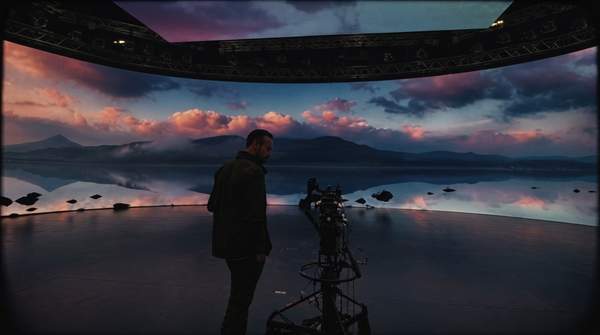
During the actual shoot, the DP uses traditional camera techniques to capture actors interacting with digital sets displayed on vast LED walls. This environment gives them unprecedented control. The LED volume itself becomes the primary light source for the scene, casting realistic, interactive light and reflections onto the actors and physical props. Instead of waiting for a gaffer to move a physical light, the DP can request real-time adjustments to the lighting within the virtual world—moving the sun, changing the time of day, or brightening a digital fixture—which is then projected by the LED volume. This merges the roles of lighting the set and lighting the background into a single, fluid action.
New Skills and Specialized On-Set Roles
The technological demands of virtual production have created a need for new skills and have given rise to entirely new roles on set. Proficiency in real-time engines like Unreal Engine, along with skills in 3D rendering and digital asset management, are becoming essential for many crew members. This has led to the emergence of specialized positions that bridge the gap between traditional filmmaking and game development technology.
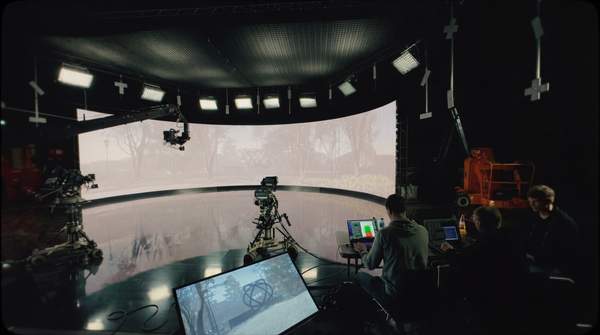
One such key role is the Volume Operator. As described by Gritty Talent, this person is responsible for managing the content displayed on the LED volume. They ensure the virtual environment is rendered correctly and coordinates between different departments to sync the virtual and physical elements during a take. This is a high-pressure, live-performance role that requires a unique blend of technical and artistic sensibilities. The skillset for this role often draws from the expertise of traditional positions like Lighting Technician, Gaffer, or Camera Assistant, but applies it within a live video and real-time rendering context, demanding a deep understanding of how the digital environment interacts with the physical set.
Adapting to the Future of Filmmaking
To succeed in the evolving landscape of film and television, film professionals must proactively acquire new technical skills in real-time engines and embrace highly collaborative workflows to thrive in virtual production environments. The clear trend is the dissolution of departmental silos and the merging of pre-production, production, and post-production into a unified, real-time workflow. This requires a willingness to learn the language and tools of adjacent departments, particularly those related to game engines and digital asset creation.
The future of filmmaking will likely feature a hybrid approach, blending the best of traditional techniques with the creative freedom and efficiency of virtual production. For crew members, this means that continuous learning and flexibility will be paramount. The most valuable professionals will be those who can navigate both the physical and virtual aspects of a set, contributing to a creative process that is more dynamic and immediate than ever before. The increased demand for roles proficient in game engine software and on-set real-time adjustments serves as a clear indicator of this industry-wide transformation.