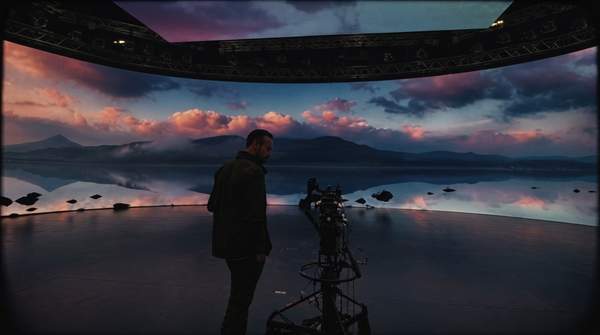
In 2019, The Mandalorian cut location shoots by 50% using a massive LED volume, fundamentally changing how high-budget television series are made, according to Nola. This adoption of virtual production allowed for unprecedented creative control on set, letting filmmakers capture complex scenes without extensive travel.
Virtual production offers creative control and efficiency for TV series, but its high initial investment and specialized skill requirements create a significant barrier to entry. While it permits real-time decision-making and reduces post-production burdens, the technology demands substantial upfront capital and a highly trained workforce.
Based on rapid technological advancements and increasing demand for immersive storytelling, virtual production is likely to become a standard for high-end TV series, but only after its costs decrease and the talent pool expands significantly.
The Cutting Edge: Top 5 Series Redefining TV with Virtual Production
Best for: High-budget fantasy/sci-fi productions seeking extensive world-building without traditional location constraints.
The Mandalorian stands as a landmark, pioneering large-scale LED volume use in 2019. This approach showcased virtual production's capacity for creating expansive, photorealistic environments, dramatically reducing location shoots by 50%, a figure reported by Nola in 2019. This wasn't merely a technical feat; it set a new standard for visual effects integration in television, fundamentally altering the on-set creative dynamic. Actors on virtual sets often report improved performance due to immersive environments compared to green screens, according to Variety interviews. This immersion, combined with directors' ability to make real-time creative decisions, influences both visual fidelity and narrative execution, forging a more cohesive artistic process.
Strengths: Enables complex, expansive digital environments; reduces need for extensive location travel; enhances actor immersion. | Limitations: High initial setup cost; requires specialized technical expertise; potential for a 'digital look' if not expertly executed. | Price: Significant upfront investment for LED volume and associated technology.
Beyond the Screen: How Virtual Production Stacks Up
| Feature | Virtual Production | Traditional Filming |
|---|---|---|
| Creative Control | Directors make real-time decisions on set, seeing final pixels through the camera, according to journals.uclpress.co.uk. | Creative decisions often deferred to post-production; limited real-time visual feedback. |
| On-Set Flexibility | Facilitates complex camera movements and lighting changes that are challenging or expensive traditionally, as noted by Xrstories Co Uk. Multi-camera setups capture different angles simultaneously. | Camera movements and lighting changes require extensive physical setup; multi-camera setups are limited by physical space. |
| Post-Production Impact | Can cut post-production time by up to 30% for visual effects-heavy shows, according to Epic Games in 2019. | Extensive post-production time required for visual effects integration and compositing. |
| Aesthetic Concerns | Some critics argue over-reliance can lead to a 'digital look' that lacks the organic feel of real locations. | Emphasizes natural lighting and authentic textures of physical locations, but limited by real-world constraints. |
This stark comparison reveals virtual production as a paradigm shift, not merely an incremental improvement. It redefines the very workflow of filmmaking, pushing creative control and technical agility to the forefront, albeit with its own set of aesthetic trade-offs.
The Engine Room: Understanding Virtual Production's Mechanics
Initial setup costs for a high-end LED volume stage can exceed $10 million, as reported by StageCraft in 2019. This significant investment covers large-scale LED panels, powerful rendering computers, and specialized infrastructure. While virtual production reduces travel, this advanced technology introduces its own resource demands, potentially increasing on-set power consumption and cooling needs for these LED volumes, according to an Environmental Impact Report. This trade-off highlights the complex balance between efficiency gains in one area and increased resource allocation in another.
The Volume at Pinewood Studios, a major purpose-built virtual production stage in Europe, has hosted various high-profile series, showcasing the immense scale of infrastructure required. Yet, modular LED panels and rental options are emerging, making virtual production studios more accessible, according to Production Hub. This sophisticated infrastructure and significant investment explain why virtual production currently remains the domain of larger, well-funded productions, though the landscape is beginning to shift.
The Future is Virtual: Opportunities and Obstacles
If the current pace of technological advancement and talent development continues, virtual production appears poised to fundamentally reshape the creative landscape for all levels of television production.
How does virtual production integrate on-set elements?
Virtual production integrates physical sets with large LED screens displaying digital environments. These digital backdrops are powered by real-time rendering engines, allowing filmmakers to visualize final pixels through the camera on set. This combination creates immersive filming environments for actors and crew, merging practical and digital elements seamlessly.