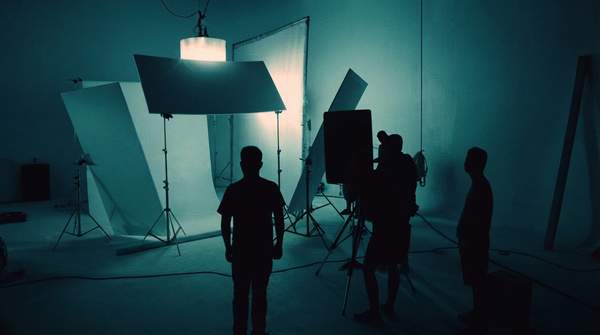
Alibaba's AI video tool revolutionizes content creation

Alibaba Group's new AI video-generation tool has surged to lead global rankings, signaling a new era where professional-grade video creation is no longer exclusive to well-funded studios but accessibl

TC
Tara Collins

April 14, 2026 · 3 min read

A futuristic AI interface generating a video, symbolizing the revolution in content creation brought by Alibaba's new tool.

Alibaba Group's new AI video-generation tool has surged to lead global rankings, signaling a new era where professional-grade video creation is no longer exclusive to well-funded studios but accessible to anyone. Independent creators can now produce sophisticated visual content previously out of reach.

High-quality video production historically demanded significant time, specialized skills, and substantial budgets. Now, generative AI offers comparable results instantly and often without cost.

The rapid advancement and widespread availability of AI video tools will accelerate content production cycles and lower entry barriers. This compels traditional media industries to innovate or face significant disruption.

Alibaba's AI Takes the Lead

Alibaba Group's new artificial-intelligence video-generation tool is leading a global ranking, according to WSJ. The rapid ascent of Alibaba's tool underscores intense competition within the AI video market. The pace of innovation in this sector is accelerating rapidly, driving new capabilities.

Alibaba's leadership position signifies a foundational shift in industry benchmarks. Top-tier performance in AI video generation is achievable by diverse players. Such advancements challenge established production houses to reassess their operational models.

How AI Video Tools Change Production Workflows

Many advanced AI image to video editing tools are now free and do not require paywalls or credit cards, according to eWeek. The accessibility of these tools significantly lowers the barrier to entry for high-quality visual content creation. It enables independent creators and small marketing teams to produce professional-grade videos without prohibitive costs.

Some teams now use AI image generator tools to quickly prototype visual directions before moving into full 3D production, according to imagine. The use of AI image generator tools re-engineers established animation workflows. Human creativity can now focus on direction and refinement rather than laborious initial asset creation.

However, longer projects typically have lower 3D animation cost per minute due to production efficiencies in asset reuse across scenes, according to imagine. AI's immediate impact is in accelerating initial creative exploration for short-form content. Traditional methods might still hold an advantage for complex, long-form narratives where asset management and reuse are key to cost-effectiveness.

What is the Future of Free AI Video Tools?

The market expects 24 free AI tools to deliver results in 2026, according to eWeek. The proliferation of these tools suggests an accelerating trend towards ubiquitous, no-cost access to advanced content creation capabilities in the near future. The competitive landscape for AI-powered content will intensify.

The sustained growth of free, high-performing AI tools indicates that the democratization of content creation is a foundational shift. It will lead to an oversaturation of 'professional-grade' content. Traditional studios must adapt to this evolving environment.

Frequently Asked Questions

How does AI image to video conversion work?

AI models analyze an input image's content, style, and potential motion vectors. They generate sequential frames by predicting how pixels would move or transform over time. This process often utilizes diffusion models or Generative Adversarial Networks (GANs) to interpolate motion and create a smooth video from a static image.

What are the latest advancements in AI video generation for 2026?

Recent advancements focus on improving temporal consistency and generating longer, more complex scenes with greater narrative coherence. Tools are enhancing user control over specific elements within a video, allowing for precise object manipulation or targeted style transfer. Further developments include better understanding of cinematic grammar for automated scene sequencing.

Can AI realistically edit videos from images in 2026?

AI can produce highly realistic short-form video segments from images in 2026, particularly for tasks like animating faces or objects with high fidelity. However, generating long, complex narratives with perfect physical accuracy and emotional nuance across extended sequences still presents a significant challenge. Human oversight remains crucial for artistic direction and ensuring overall narrative coherence.

By 2026, the proliferation of accessible AI image to video editing tools will continue to challenge traditional production models. Studios like those producing high-end 3D animation must integrate AI prototyping or risk being outpaced by nimble, cost-effective independent creators.