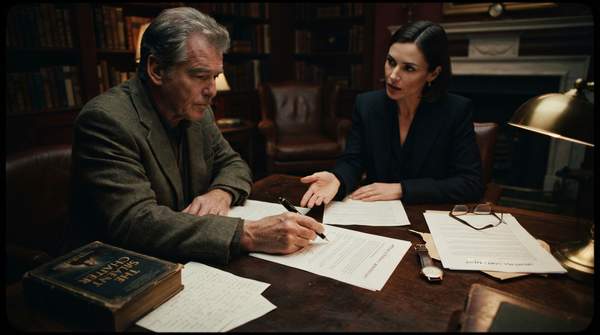
When a production company options your indie game, the deal that lands in your inbox is usually an option agreement, not a purchase. It grants the studio the exclusive right to buy adaptation rights later, for a fee that is generally structured as 10% of the eventual purchase price, with the balance paid only if the option is exercised. What separates a good outcome from a bad one, according to entertainment lawyers and adaptation producers, is how clearly the agreement defines exclusivity, approval rights, ownership of new material, and your own creative involvement.
The Growing Trend of Video Game Adaptations
Video game IP has become prime screen material. Christopher Dring, writing in The Game Business, argues there has never been a better moment for developers to adapt their games to film or TV, and points to recent successes built with creators at the table: Mojang was actively involved with Minecraft, Nintendo co-funded the Mario movie, and Neil Druckmann is one of the writers and directors of The Last of Us television series.
The trend has reached independent creators, not just AAA franchises. Deadline reported in October 2026 that Scarlet Stallone's SRYN Productions has optioned rights to the horror franchise Fears to Fathom for film and television development, teaming directly with its creator, Rayll, who built the first installment while a student at Delhi Technological University and founded Rayll Studios in 2023. For a solo or small-team developer, that kind of deal is now a realistic scenario, which makes understanding the mechanics urgent.
Understanding the Option Agreement: Your First Step
Entertainment attorney Harris Tulchin describes the option as "the right to purchase a literary property, within a specified period of time, for a specified price," noting it is among the most commonly used and most frequently misunderstood terms in the industry. For a game developer, the underlying property is your game's IP rather than a screenplay, but the structure is the same.
The economics follow a familiar pattern. Taylor Von Elling's guide to option purchase agreements explains that option fees are generally structured as 10% of the total purchase price, credited toward that price if the option is exercised. If the company needs more time, it can pay for an extension. If it never exercises, the rights revert to you, allowing you to pursue other opportunities. Tulchin's advice is blunt: all key terms and conditions should be negotiated and put in writing up front, so that if financing and creative elements come together within the option period, rights transfer in an orderly way.
Decision Framework: Navigating Your Adaptation Deal
The framework below organizes the major terms by their function in the deal—rights control, financial return, and creative integrity—and pairs each with the question a developer should pose before signing. The legal analysis of licensing terms draws on Ryan Fairchild's guidance for Odin Law and Media, a firm specializing in game industry deals.
| Deal Stage | Key Term | Developer's Goal | Critical Question |
|---|---|---|---|
| Optioning | Option agreement | Secure a fee now, keep rights if the option lapses | How long is the option period, what do extensions cost, and what exactly reverts to me if it is not exercised? |
| Licensing | Exclusivity | Limit the grant by platform, territory, and time | Could the licensee also let a competing studio build a different adaptation, and can I keep rights I am not selling? |
| Licensing | Approval and quality control | Protect the game's reputation from a bad adaptation | What triggers an approval requirement, how long do I have to respond, and what happens if I simply go silent? |
| Licensing | Revenue sharing | Participate in the adaptation's success beyond the purchase price | What royalties, bonuses, or derivative rights payments flow back to me if the film or show succeeds? |
| Licensing | Ownership of derivative works | Retain rights to material derived from the original game | Who owns the new code, art, characters, and story elements created for the screen version? |
| Production | Creator involvement | Stay engaged as the creative engine of the IP | What credited, paid, contractual role do I have in development, and what decisions require my input? |
Fairchild warns that these terms "make or break" cross-platform arrangements, and that developers do not always think them through before signing. On derivative works specifically, he notes that new material created during an adaptation—new code, interface design, art assets, even new mechanics—is its own copyrightable work, and ownership does not automatically follow ownership of the underlying game. One common structure gives the IP owner everything, including new content, through a work-for-hire or assignment provision; the agreement should state explicitly which structure applies.
Why Creator Involvement is Critical for Success
The strongest argument for contractual involvement comes from the producers doing these deals. Story Kitchen's Goldberg, quoted by Dring, is categorical: "If the games rights holder, the developer or publisher, or both, is not involved or is minimally involved, it will be to the detriment of the adaptation. It's worse than playing your hand in Las Vegas at the craps table. They need to be involved. You would be erasing the creative engine that has built these characters, these worlds, these tones, these fans."
His partner Johnson adds a counterweight: excessive control can backfire too, referencing the original Mario movie, so the goal is balance. There is also a business risk on the developer's side—Goldberg notes that a team distracted from its game community is "a significant creative and business risk."
Hollywood's receptiveness has shifted. Goldberg estimates that when Story Kitchen's Dimitri started fifteen or sixteen years ago, the industry was roughly 75/25 against respecting game creators, producing "smash and grab-esque" horror stories; today he puts it at about 85/15 in favor. Sony's Asad Qizilbash, head of PlayStation Productions, frames the craft side: success comes down to "respecting the source material while also understanding the language of film and television," collaborating with creatives who can bridge the gap rather than attempting a one-to-one translation.
The 'Fears to Fathom' Case Study: A Real-World Example
The Fears to Fathom deal illustrates the first stage of the pipeline. Per Deadline's reporting, SRYN Productions optioned the franchise for film and television development, and the creator himself is teamed with the production company rather than sidelined. That is an option deal, not a full purchase or a production commitment—most options never reach the screen, and the structure exists precisely so a company can test the waters before committing.
For Rayll, the immediate implications map directly onto the framework: the option period and any extensions define how long his franchise is tied up, the scope of the option defines which media and territories are covered, and his named involvement is the contractual hook that Story Kitchen's producers would call mission critical. If the option lapses unexercised, the rights revert to him.
Securing Your Vision: Key Takeaways for Indie Developers
Indie game developers should prioritize securing clear contractual terms for exclusivity, approval rights, ownership of derivative works, and direct creative involvement when considering film and TV adaptation offers. This article is an informational guide to common deal structures, not legal advice, and specific figures beyond the general 10% option-fee structure vary widely and are typically confidential.
The measurable indicator of a well-negotiated deal is a signed option or licensing agreement that explicitly addresses the developer's creative control, financial participation beyond initial fees, and the scope of IP rights granted for the adaptation. Before signing anything, run the framework above against the draft: if any row's critical question is answered vaguely or not at all, that is the term to negotiate next.
Sources
- "We’ve never had a better moment to adapt your game to film or TV" — Thegamebusiness
- Scarlet Stallone Developing 'Fears To Fathom' Video Game For Film & TV — Deadline
- Harris Tulchin & Associates Ltd — Medialawyer
- A Beginner's Guide to Option Purchase Agreements in Film and TV - filmandink.com
- Video Game Licensing: Cross-Platform Adaptations — Odin Law and Media
- Building IP Empires: How Video Game Adaptations Are Taking Over Screens - Boardroom