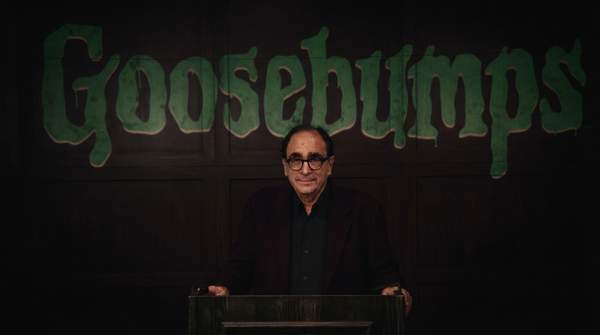
The 23rd annual West Virginia Book Festival drew more than 5,000 attendees to the Charleston Coliseum & Convention Center on Saturday, October 24, a sharp jump from the roughly 3,000 visitors the event typically receives each fall. Festival co-chair Stan Howell attributed the surge directly to this year's headliner, the children's horror novelist R.L. Stine, telling reporters visitors arrived from South Carolina, Florida, Michigan and Georgia specifically to see him. The figure is an organizer's estimate reported on the day of the event, not a final certified count.
Record-Breaking Success at the 2026 West Virginia Book Festival
The festival, a free annual fall staple for more than two decades, has long settled into a reliable rhythm: national bestselling authors, local writers, workshops, family activities, a literary marketplace and the Kanawha County Public Library's used book sale. Co-chair Sarah Mitchell framed the event's identity in those terms. "This is the West Virginia Book Festival. It is our 23rd year, and it is an event in which we bring national bestselling authors to West Virginia," she said. "But we also promote the local authors."
This year's featured speakers paired Stine with nonfiction author Margot Lee Shetterly, New York Times bestselling novelist Kate Quinn, mystery author and West Virginia native Craig Johnson, and local author and illustrator Rosalie Haizlett. The venue's event listing scheduled the festival from 8:00 a.m. to 5:00 p.m. What changed in 2026 was not the format but the scale of the draw: Howell's estimate of more than 5,000 attendees represents an increase of at least 25 percent—and potentially closer to two-thirds—over the event's usual 3,000-person baseline.
The R.L. Stine Effect: A National Draw
Howell was explicit that the attendance jump traced to a single booking decision. "Every year we get 3,000 people that come to this book festival. This year it's gonna be over 5,000," he said. He described speaking with visitors who had traveled from multiple states "specifically for R.L. Stine," evidence that the headliner extended the festival's geographic reach well beyond its customary regional audience.
The choice of Stine also broadened the crowd's generational mix. Mitchell, speaking ahead of the event, pointed to the span of readers his work has reached: "I think it is just awesome to see the generations he's touched, and that he's coming to the West Virginia Book Festival, and he wants to be here this weekend in our state." For a festival that positions itself as a celebration of literature for "book lovers of all ages," a headliner whose readership spans parents and children alike served both goals at once—packing the venue while reinforcing the family-friendly character organizers emphasize.
Fostering Local Literary Engagement and Community
The record crowd did not displace the festival's local mission; it arrived alongside it. Mitchell detailed how regional writers were woven into the program through a competitive selection process. "Local authors were able to submit program proposals, and we selected the best of the best, and they get to present on different topics in our area," she said. "Some of them are presenting on their book, some of them are presenting on their writing process, and then they get to sell their book afterwards."
The marketplace extended that local focus to the vendor floor. Mitchell counted 45 vendors selling books, including publishing companies based in West Virginia, local authors and community partners sharing resources. Craig Johnson's presence carried particular weight as a West Virginia native among the national headliners, alongside Haizlett as the local author and illustrator representative. Mitchell, a librarian, framed the whole as a shared celebration: "I love that we are just celebrating the written word, and everyone has a piece of it that they get to enjoy when they come to the book festival."
West Virginia Book Festival's Dual Strategy for Success
Mapping the festival's reported activities and stated goals onto a two-pronged model shows how the 2026 results fed both halves of the strategy in tandem. The mass-appeal component—booking a high-profile headliner—drove the attendance surge and widened the geographic draw, while the local-engagement component preserved the festival's foundational role in the regional literary ecosystem. The table below categorizes each component, its objective, its 2026 execution and the reported evidence of impact.
| Strategy Component | Objective | 2026 Execution | Evidence of Impact |
|---|---|---|---|
| Mass Appeal | Attract a broad audience and increase overall attendance | Featured R.L. Stine as headliner, alongside Kate Quinn, Margot Lee Shetterly and Craig Johnson | Attendance surged to over 5,000, with visitors arriving from South Carolina, Florida, Michigan and Georgia specifically for Stine, per co-chair Stan Howell |
| Local Engagement | Provide a platform for local authors, foster community and offer diverse literary activities | Local author presentations selected from submitted proposals; writing workshops; family activities; a 45-vendor marketplace including West Virginia-based publishers and community partners; the library's used book sale | Continued to serve as an annual fall staple for book lovers of all ages, with local authors presenting and selling their books on site |
The framework's key insight is that the two components were not competing priorities but complementary ones. The headliner brought in visitors who might never otherwise have attended, while the local program gave every one of them—whether from Charleston or from out of state—a full slate of regional literary activity to discover once they arrived.
Looking Ahead: Sustaining the Festival's Momentum
The West Virginia Book Festival should continue its strategic approach of balancing high-profile national headliners with robust local author support and community engagement to sustain—and potentially grow—its record attendance. The 2026 result demonstrates that a single, multigenerationally popular author can lift a 23-year-old regional event well past its usual draw without displacing its local mission.
The measurable indicators to watch are future attendance figures and continued reports of diverse geographic participation, alongside sustained local author and vendor involvement. The immediate next milestone is official confirmation of the final 2026 attendance figures from festival organizers or the Kanawha County Public Library, replacing the day-of estimate of more than 5,000 with a certified count. Whether next year's headliner can hold that new baseline will show whether 2026 was an outlier or the start of a larger audience for the festival's dual strategy.
Sources
- West Virginia Book Festival draws 5,000-plus to Charleston, boosted by R.L. Stine — WCHS
- 2026 West Virginia Book Festival — Chaswvccc
- West Virginia Book Festival
- West Virginia Book Festival brings national, local authors to Charleston — WOWK 13 News
- 2026 West Virginia Book Festival Slated For Saturday - West Virginia Public Broadcasting